What an effective sales onboarding plan actually looks like
With clear and structured onboarding, reps ramp with confidence. Managers coach with focus. Knowledge stops getting trapped in decks and starts moving through the team.
Sales onboarding rarely fails because teams don’t care. It fails because knowledge gets stuck.
Pitch decks live in folders. Playbooks age fast. Seasoned sales reps carry critical context in their heads. New hires are expected to connect the dots while hitting quota.
The result? Long ramp times. Inconsistent messaging. Managers repeating the same answers, week after week.
A strong sales onboarding plan fixes that. Not with theory, but with structure, clarity, and momentum.
Here’s what we’ll cover:
- What a sales onboarding plan actually is
- What to include (with real examples)
- A complete 30-60-90-day sales onboarding plan sample
- How to turn your plan into interactive sales training without starting from scratch
What is a sales onboarding plan?
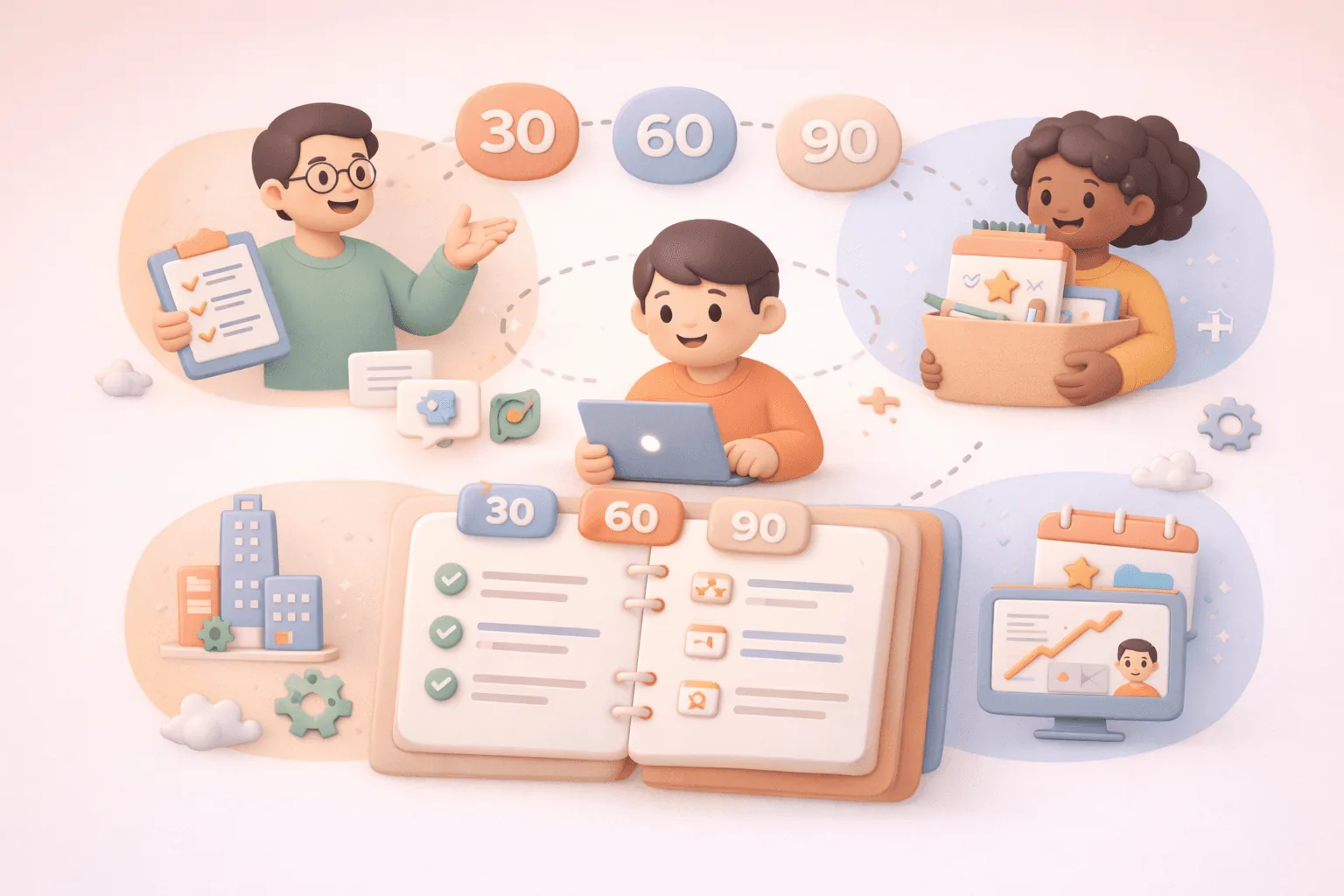
A sales onboarding plan defines what new sales reps need to learn, when they need to learn it, and how progress is measured.
In practice, it sits at the foundation of your broader sales enablement efforts, ensuring every rep starts with the same context, process, and expectations. It pulls together:
- Company and product knowledge
- Your sales process and methodology
- The tools reps use every day
- Clear expectations for the first 30, 60, and 90 days
Without a plan, onboarding depends on shadowing and memory. That works for a small team. It breaks fast as the team grows.
Clear structure is one of the biggest drivers of onboarding success because reps know exactly what’s expected and when. That’s the difference between onboarding that exists and onboarding that actually works.
What to include in a sales onboarding plan
Most effective sales onboarding plans share a common structure. Think of this structure as a practical sales onboarding checklist that helps new reps focus on the right things in the right order.
At a high level, an effective sales onboarding process includes:
- Company and product knowledge
- Sales process and methodology
- Tools and systems training
- Role-specific expectations and metrics
- Customer personas and market context
Together, these elements form the backbone of a structured sales onboarding program, not a one-off training event.
Let’s break down what each of these areas should include in practice.
Company and product knowledge
Before reps learn how to sell, they need to understand what they’re selling and why it exists, in terms they can confidently explain to a prospect.
This part of a sales onboarding plan usually includes:
- What your company does and who it’s for
- The core problems your product solves
- Key features and how they map to customer outcomes
- How your offering fits into the broader market
The goal is confidence, not recall. When this knowledge is clear and easy to revisit, reps explain value naturally and move forward without hesitation.
Sales process and methodology
This is where clarity turns into action.
Reps need to know how a deal actually moves through your entire sales organization.
This section should clearly outline:
- How prospects move from first contact to close
- What’s expected at each stage of the sales cycle
- When and how deals are handed off after closing
Most sales onboarding plans break this down into clear stages, such as prospecting, qualification, discovery, closing, and handoff. Each stage should answer one question: what does “good” look like here?
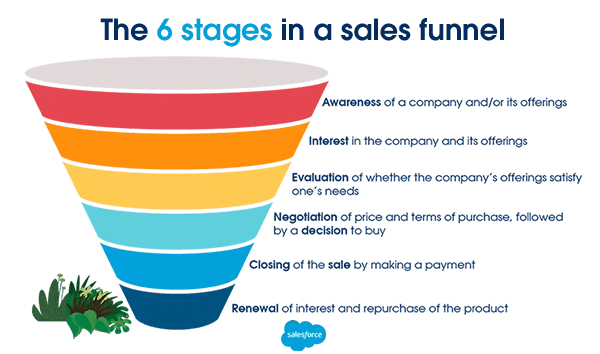
When the company’s sales process is visible and repeatable, reps stop guessing. Forecasts improve. Coaching becomes specific. Deals move forward with fewer surprises.
Sales onboarding tools and systems training
Sales tools shape how work actually gets done.
CRMs, call tools, email platforms, and reporting dashboards aren’t side notes. They’re where sales reps spend most of their day. If onboarding skips this, everything else slows down.
This part of the sales onboarding plan should focus on the tools reps are expected to use from day one, including:
- Your CRM and how deals are tracked across stages
- Communication tools for calls, email, and follow-ups
- Internal systems for pricing, contracts, or approvals
- Where sales content lives and how to access it quickly
The goal is fluency in the workflows that support selling.
When reps know where to log activity, how to move deals forward, and where to find the right materials, they spend less time figuring things out and more time talking to customers.
Role-specific expectations and metrics
This is where onboarding becomes measurable.
New reps want to know how they’re doing. Managers need a way to coach without guessing. Clear expectations solve both.
This section of a sales onboarding plan should define success at each stage of ramp through observable outcomes.
Most plans include:
- Individual quotas and core KPIs
- 30-60-90 day milestones
- Clear signals of progress at each phase
When expectations are visible, reps self-correct faster. Managers spend less time clarifying priorities and more time coaching real behavior.
It also removes anxiety. Reps know what matters now, what comes next, and how sales performance is evaluated.
Customer personas and market knowledge
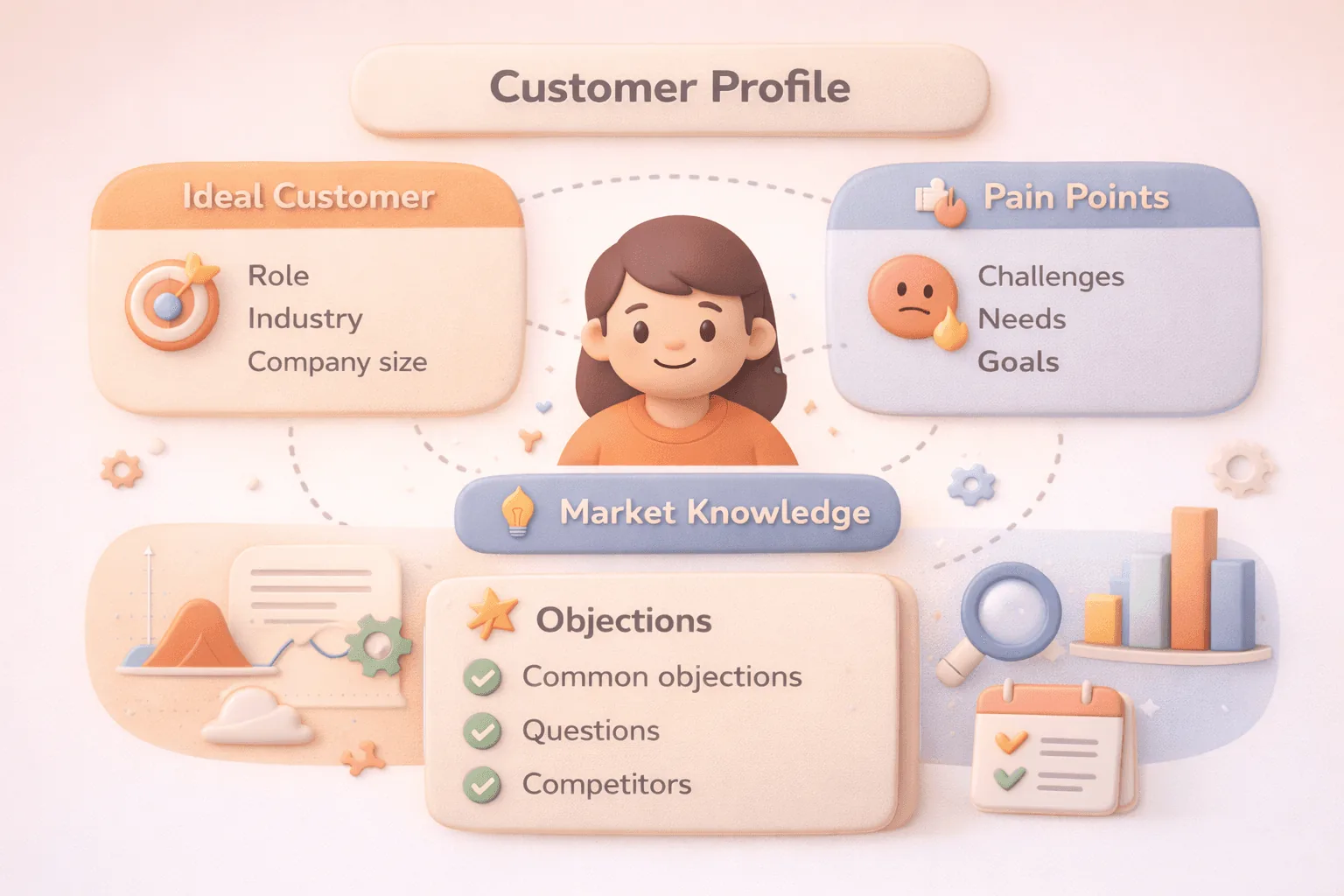
Selling gets easier when reps understand who they’re talking to.
This part of the sales onboarding plan gives context beyond the product. It helps reps recognize patterns in real conversations, not just follow scripts.
A practical plan usually covers:
- Ideal customer profiles and who you sell to most often
- Common pain points that trigger buying conversations
- Typical objections and what sits behind them
- The competitive landscape reps will hear about on calls
The goal is situational awareness. Reps learn to spot buying signals, tailor their message, and avoid one-size-fits-all pitches.
Sales onboarding plan sample: The 30-60-90 day framework
The 30-60-90 framework is often used to anchor an effective sales onboarding program because it aligns learning with real ramp milestones.
They don’t absorb everything at once. Confidence builds in stages: understanding, repetition, then ownership.
This framework gives teams structure without rigidity. It’s flexible enough to fit different sales roles, yet clear enough to remove uncertainty for both reps and managers.
Below is a realistic sales onboarding plan sample you can adapt to your own team.
Days 1-30: Foundation and familiarity
The first month is about orientation, not output.
New reps are learning how your company sells before they’re expected to sell themselves. This phase builds shared language and baseline confidence.
Most sales onboarding plans focus on:
- Week 1: Company culture, values, positioning, and a high-level product overview
- Weeks 2-3: Deeper dives into product features, customer personas, and the competitive landscape
- Week 4: CRM and tools training, plus shadowing first live calls
Milestone: Handle basic product questions
By day 30, reps can clearly articulate the company’s value proposition and handle basic product questions.
This is where delivery makes a difference. Instead of compressing everything into long coaching sessions, teams increasingly break this foundation into interactive training.
With a knowledge transfer platform like Coassemble, sales teams can turn onboarding content into structured, self-paced training. Reps move through modules in order, while sales managers can see progress against defined milestones.

Days 31-60: Application and practice
This is where onboarding often starts to break down.
Reps move from theory to real conversations. New situations surface. Details fade. Without reinforcement, most learning simply doesn’t stick. Research behind the forgetting curve shows people can forget up to 70% of new information within a week if they don’t revisit it.
This phase typically includes:
- Weeks 5-6: Role-play calls, demo practice, and objection-handling exercises
- Weeks 7-8: First supervised prospect calls, outbound email campaigns, and early pipeline building
Milestone: Be able to book first qualified meetings and navigate the full sales cycle
By day 60, reps have booked their first qualified meetings and feel comfortable navigating the full sales cycle with guidance.
Static onboarding struggles here because it assumes learning is one-and-done. Interactive training gives reps a way back to the exact topic they need – during prep, after a call, or mid-deal – without waiting for another session.
Days 61-90: Independence and optimization
The final phase is about ownership and consistency. This shift toward ownership is a defining trait of effective onboarding programs, where learning continues beyond initial ramp.
Reps should now be managing their pipeline independently, closing early deals, and refining their approach based on real results.
This stage usually focuses on:
- Weeks 9-10: Managing a full pipeline independently and closing first opportunities
- Weeks 11-12: Reviewing what’s working, analyzing deal outcomes, and participating in targeted coaching
Milestone: Operate independently toward quota attainment
By day 90, reps are operating independently and tracking toward quota attainment.
Importantly, onboarding doesn’t stop here. Products change. Messaging evolves. Processes shift. When training is easy to update, onboarding stays aligned without rebuilding the entire plan. With Coassemble, updating sales onboarding content for new products or processes takes minutes, not weeks.
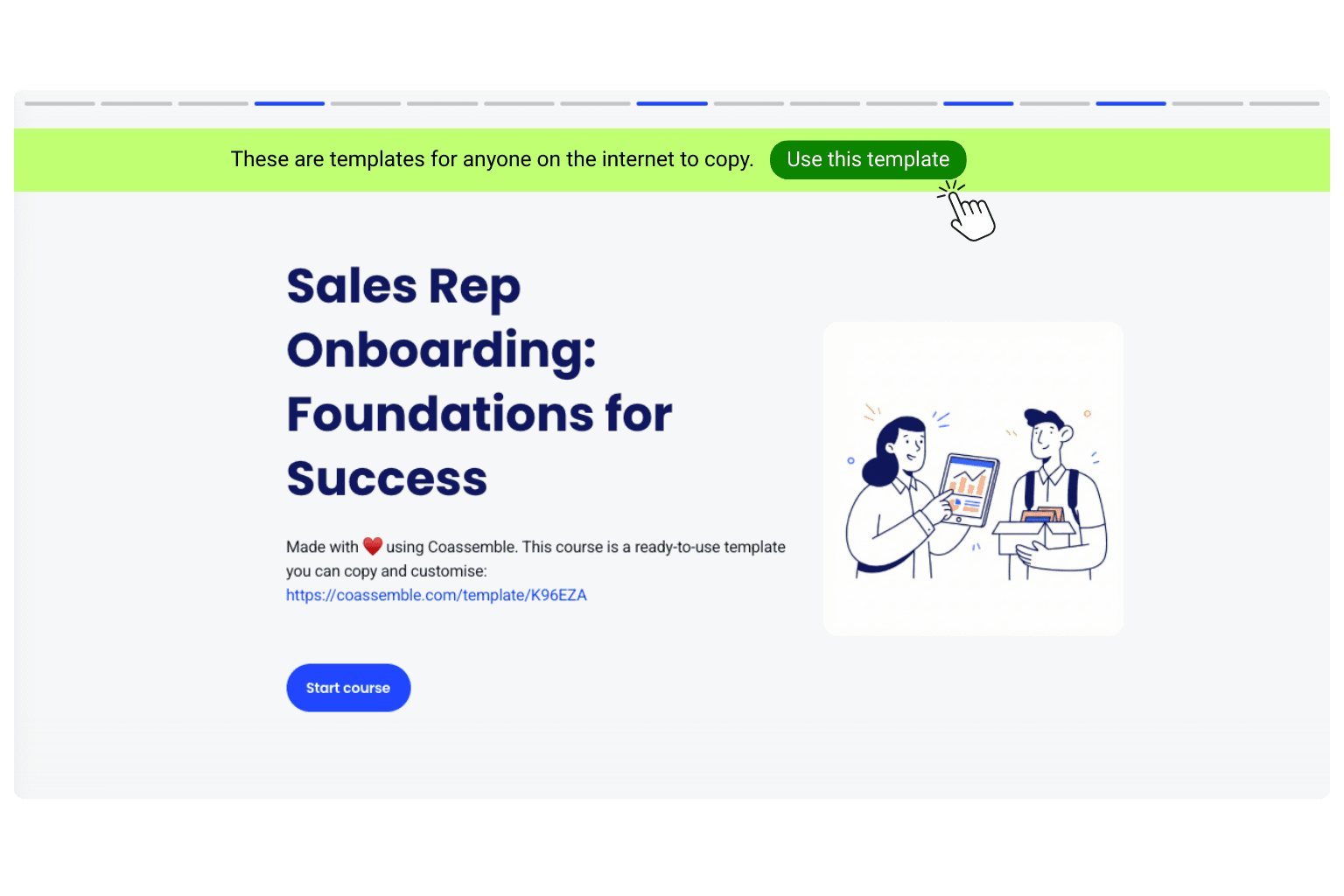
Once approved, the sales onboarding course built in Coassemble can be embedded directly into this page. Sales enablement teams can follow the structure step by step, copy the course into their own workspace, or adjust the content to match their sales process, without rebuilding the plan from scratch for every new hire.
You can view and reuse the full sales onboarding course here: Sales Rep Onboarding: Foundations for Success
How to make an interactive sales onboarding plan with Coassemble
A clear 30-60-90 day plan gives structure. The next challenge is execution.
Without the right setup, even the best plan ends up scattered across folders, slide decks, and one-off coaching sessions. Reps know what they should learn. They just don’t have a single place to learn it.
That’s where turning your plan into interactive training matters.
Here’s how teams use Coassemble to bring a sales onboarding plan to life using the content they already have.
Step 1: Gather your existing materials
Most sales teams don’t need more content. They need to organize what already exists.
That usually includes:
- Sales playbooks and onboarding guides
- Pitch decks and product slides
- Competitive battle cards
- Pricing or objection-handling documents
- Recorded calls or internal notes
This knowledge is proven. It just isn’t structured for learning. The goal is to move it out of static files and into a format reps can actually work through.
Step 2: Transform documents into interactive courses
The right sales onboarding tools make it possible to turn existing documents into structured training without rebuilding everything from scratch.
With your materials ready, open the Coassemble course builder and start creating.
Choose the option to transform an existing document, then upload the file your sales team already uses. PDFs, PowerPoint slides, and Word docs are all supported.
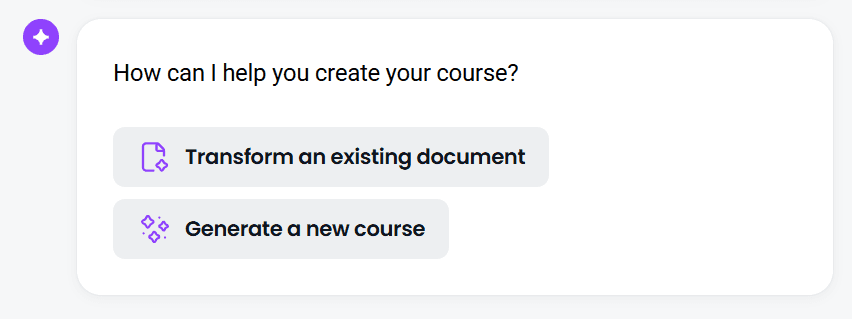
Coassemble’s AI reviews the content and turns it into structured training automatically. Lessons are created for you, with a clear flow, built-in quizzes, and interactive elements ready to review.
Instead of rebuilding onboarding from scratch, you’re reshaping trusted sales knowledge into training reps can revisit as they move through their first 30, 60, and 90 days.
Step 3: Build your training pathways
Once your course is generated, organize it to match your onboarding strategy.
For most teams, that means sequencing training around:
- Company fundamentals
- Product and market context
- Sales process and methodology
- Tools and systems training
This creates a guided path that aligns directly with the 30-60-90 day framework. Training doesn’t feel like extra work. It becomes part of how reps ramp.
You can share courses with a simple link, drop them into Slack or Teams, or connect them to an existing LMS. No need to force reps into a new workflow.
Step 4: Track progress and iterate
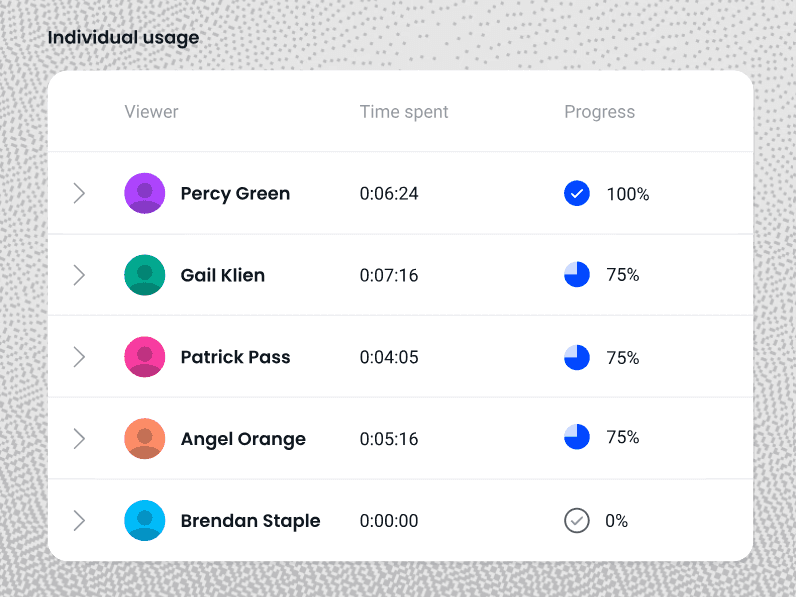
With Coassemble, you can see exactly how reps are engaging with training. Which lessons they’ve completed. Where they’re slowing down. What they return to most often.
This turns onboarding into a living system. You refine content as deals, products, and processes evolve.
Your sales onboarding plan stays relevant because the knowledge behind it stays in motion.
Wrapping up
A sales onboarding plan shouldn’t live on paper. It should guide real behavior.
With clear and structured onboarding, reps ramp with confidence. Managers coach with focus. Knowledge stops getting trapped in decks and starts moving through the team.
The 30-60-90 framework gives you the structure. Interactive training gives it life.
With a modern knowledge transfer platform like Coassemble, sales onboarding becomes something you can build once, improve continuously, and reuse as your team grows. Not a one-time project. A system that keeps pace with change.
Your team already has the knowledge. The opportunity is making it usable, right when it’s needed.
If you’re thinking beyond sales, this same approach applies to onboarding more broadly. This guide on building structured customer onboarding shows how clarity and sequencing support effective onboarding across teams.
FAQs about sales onboarding plan
What is the onboarding process in sales?
The sales onboarding process is how new reps learn your product, sales process, tools, and expectations. It usually spans the first 30–90 days and combines learning, practice, and coaching so reps can ramp confidently and sell consistently.
What are the 5 pillars of onboarding?
The five pillars are Clarity, Compliance, Culture, Connection, and Check-in. Together, they ensure new sales hires understand expectations, complete required training, feel part of the team, build relationships, and receive ongoing feedback and support during ramp.
What is the 30-60-90 rule in sales?
The 30-60-90 rule breaks onboarding into three phases. The first 30 days focus on learning and context. Days 31–60 emphasize practice and guided execution. Days 61–90 are about independence, optimization, and owning results. It helps reps ramp in stages instead of all at once.
Keep reading
What Is a Learning Experience Platform (LXP)?
Most articles on learning experience platforms are written for people who already run a mature training program. This one is for someone who's just been handed a knowledge problem to solve, fast. Here's what a learning experience platform is, how it fits next to an LMS, its key features, and the examples worth knowing — so you can tell whether an LXP is the right fit for your team.
Microlearning Trends 2026: What's Really Changing
The microlearning trends shaping 2026 all point to the same shift: short, focused lessons are replacing long courses because they finally fit inside busy schedules. But the real story isn't just length — it's who gets to build the training in the first place. Here are the five shifts driving the numbers this year, and what they mean for teams under pressure to move fast.
The LMS is no longer enough: The shift toward embedded learning
Learning platforms can deliver and track content well — but today's teams expect more. They want to create interactive learning inside the systems they already use. This guide explores how embedded e-learning turns an LMS from a delivery tool into a complete learning ecosystem.