AI sales training: a practical guide for growing teams
When AI sales training works, knowledge doesn’t sit idle in documents or decks. It shows up in talk tracks, cold calls, and real-world scenarios. Reps practice more. Coaching feels relevant. Performance improves over time.
Most conversations about AI sales training focus on advanced call analysis, real-time coaching, and complex systems built for enterprise sales teams. Powerful tools, yes. Practical for growing sales organizations? Not always.
Many teams don’t need another platform analyzing every sales conversation. They need a faster way to turn existing content into training reps can actually use without long setup, heavy costs, or a steep learning curve.
In this guide, we’ll cover:
- What AI sales training really means for modern sales teams
- The main types of AI-powered sales training tools available today
- Where AI sales coaching and role play fit into rep development
- How to turn existing sales content into accessible, trackable training
- A practical way to launch AI-powered sales training without enterprise complexity
What is AI sales training?
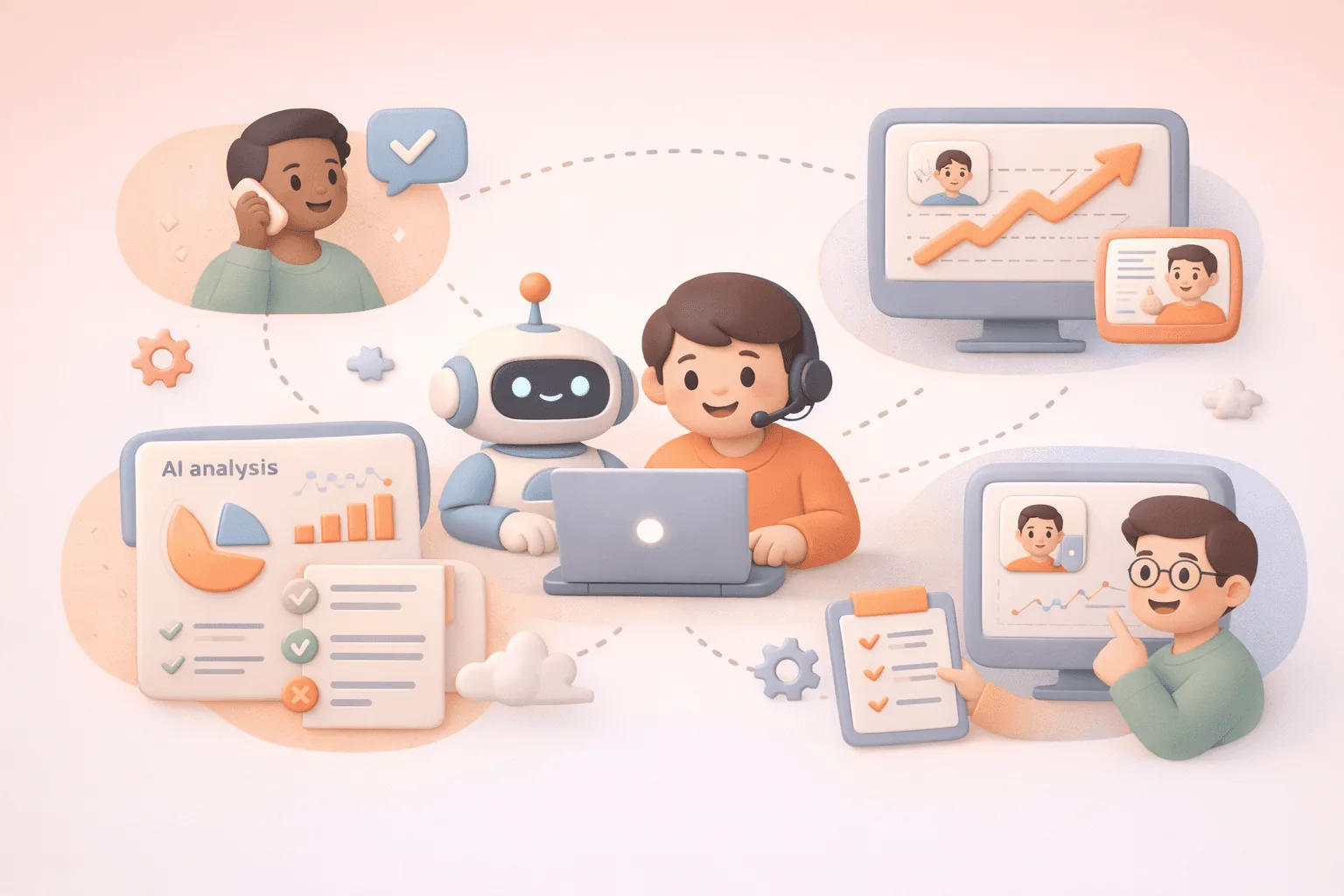
AI sales training uses artificial intelligence to help sales teams learn faster and improve sales skills without adding more manual work.
Instead of one-off sales training sessions, AI turns everyday sales activity into ongoing learning.
That can mean:
- Using AI to analyze sales conversations and customer interactions
- Giving sales reps instant feedback after practice or real sales calls
- Supporting personalized coaching based on rep performance
- Helping sales managers track rep progress without spreadsheets
The goal is to scale traditional coaching, not replace it.
When AI sales training works, knowledge doesn’t sit idle in documents or decks. It shows up in talk tracks, cold calls, and real-world scenarios. Reps practice more. Coaching feels relevant. Performance improves over time.
That’s what modern sales training looks like when artificial intelligence is applied with purpose.
4 types of AI sales training tools
AI sales training shows up in a few distinct tools. Each supports a different part of how sales enablement teams train, coach, and support sales reps.
The key is understanding what each type is designed to do.
AI sales online learning
These tools focus on turning existing sales content into structured training.
They’re built for teams that already have the knowledge, but struggle to make it usable day to day. Sales playbooks, battle cards, and onboarding decks pile up fast. Very little of it gets revisited once onboarding ends.
According to Seismic, around 60% of content created by marketing goes unused by sellers. Not because it lacks value, but because it’s hard to find, hard to apply, or disconnected from real sales activity.
AI-powered sales training tools address that gap. They use artificial intelligence to:
- Convert static files into interactive training
- Structure content into lessons with learning objectives
- Add simple assessments to reinforce sales skills
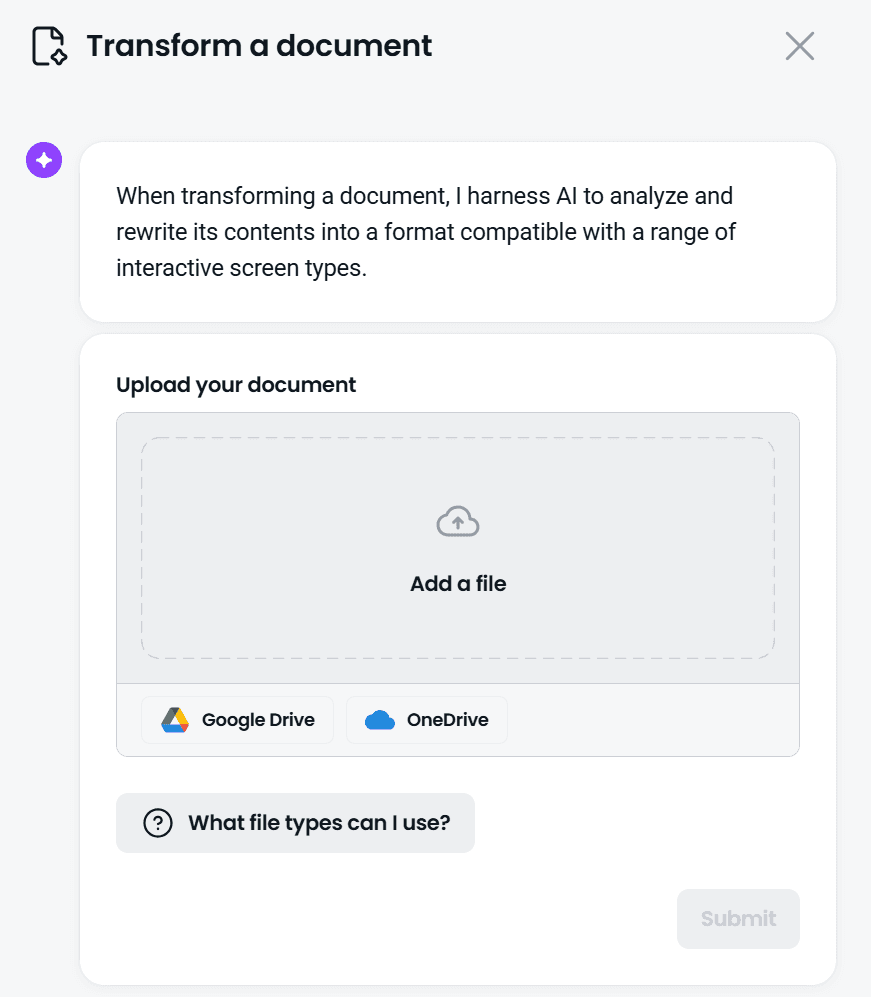
Knowledge transfer tools like Coassemble fit into this category. With AI Create, sales enablement teams can upload a document or slide deck and turn it into interactive training in minutes: no manual formatting, no long build cycles. It’s a practical way to launch AI sales training online using content teams already trust.
AI sales coaching
AI sales coaching focuses on improving performance through feedback and analysis.
These tools typically:
- Analyze sales calls and sales conversations
- Review customer interactions for patterns and gaps
- Suggest improvements based on rep performance
- Support personalized coaching at scale
AI sales coaching platforms like Gong use conversation intelligence to highlight key moments and coaching opportunities. They’re powerful for sales leaders managing large volumes of real sales calls, especially in enterprise sales teams.
For many growing teams, though, this level of tooling is often more than they need.
AI sales role-play
AI sales role-play tools focus on practice and repetition. They allow sales reps to:
- Practice cold calls and objection handling
- Run through real-world scenarios
- Receive instant feedback during role-playing exercises
- Build confidence before live customer conversations
Tools like Hyperbound and Second Nature specialize in AI sales training role-play for call practice. They’re effective for sharpening rep skills, especially during onboarding or when introducing new messaging.
AI sales training bots
AI sales training bots support sales reps through guided practice and instant feedback between coaching sessions.
They’re commonly used to:
- Practice pitches and objection handling
- Reinforce talk tracks and sales process steps
- Provide instant feedback during role-playing exercises
- Support continuous learning without scheduling live coaching
A common example is Mindtickle, which uses AI-driven sales training to help reps practice skills, receive feedback, and improve performance through structured enablement programs.
In this context, AI works behind the scenes. The focus stays on sales training that helps reps ramp faster and perform better.
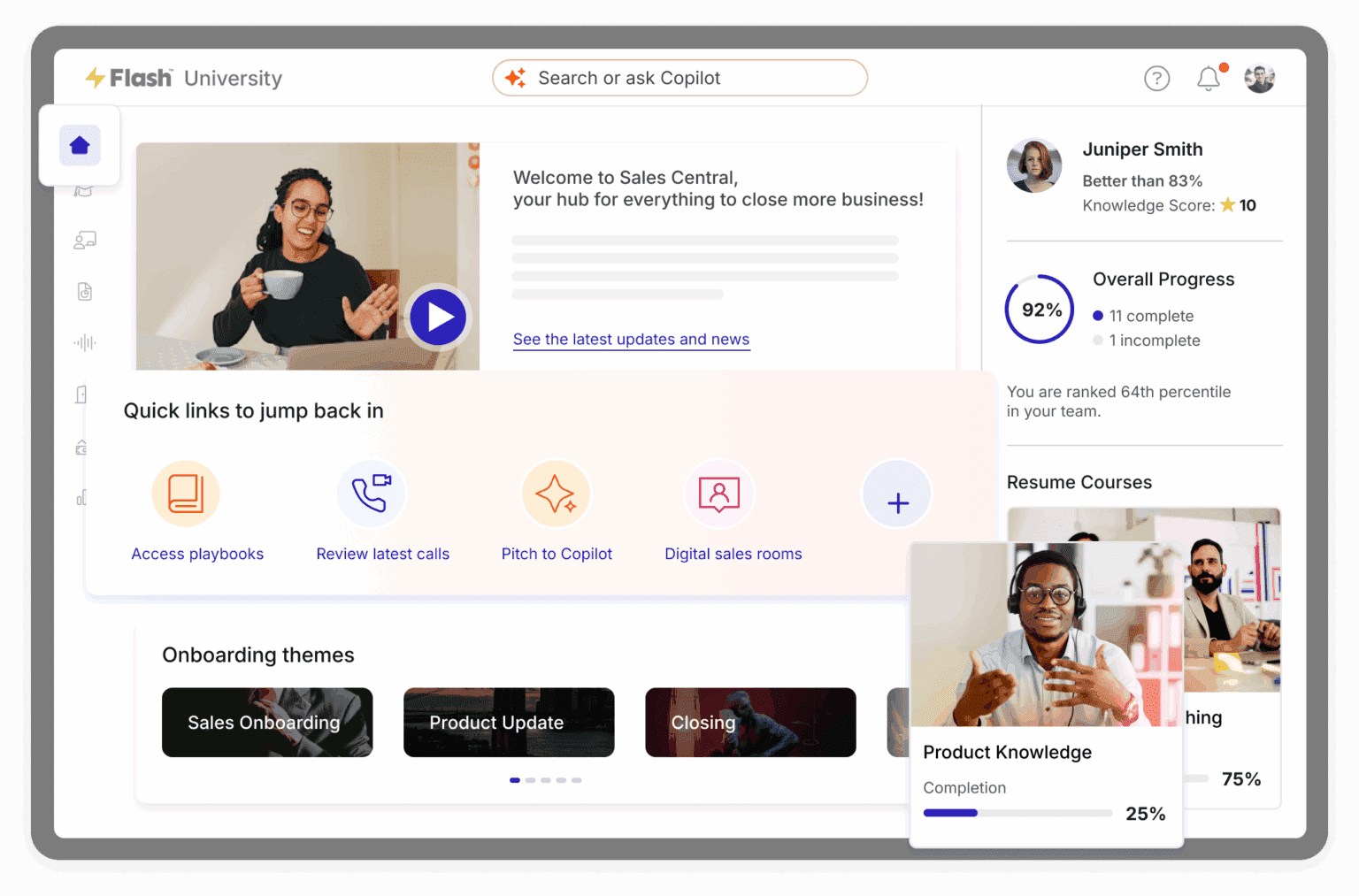
In this context, AI works behind the scenes. The focus stays on sales training that helps reps ramp faster and perform better.
How to use Coassemble to create your sales training
Once you’ve decided what your sales team needs to learn, the next step is turning that knowledge into training without design work, coding, or complex setups.
Here’s how sales enablement teams use Coassemble to create AI-powered sales training from existing content.
Step 1: Open Coassemble and start creating.
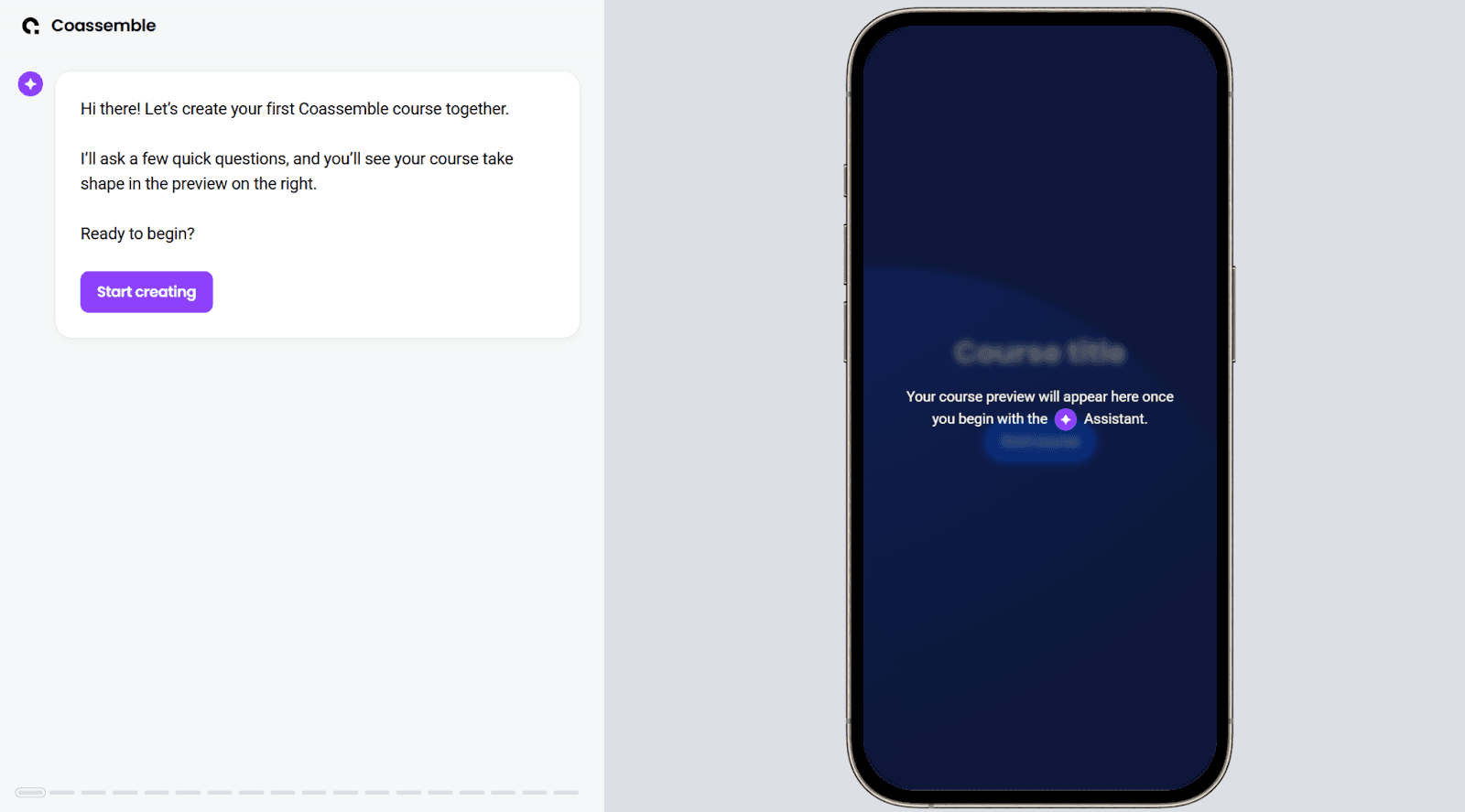
Head to Coassemble and click Start creating.
You can open the course builder immediately to test how the tool works.
The builder launches right away, so you can see how your sales training would come together in real time.
Step 2: Transform an existing sales document.
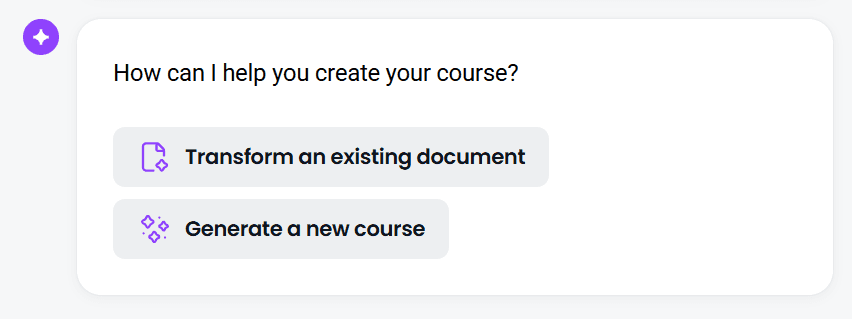
Once the builder opens, choose Transform an existing document. Upload a file your sales team already uses, such as:
- A sales playbook
- Battle cards or competitive intel
- An onboarding guide
- A pricing or objection-handling document
You can upload PDFs, PowerPoint slides, or Word docs.
Coassemble’s AI scans the content, identifies key points, and automatically turns it into structured sales training. Lessons are created for you, with a clear flow, built-in quizzes, and interactive elements ready to review.
Instead of rebuilding training from scratch, you’re reshaping proven sales knowledge into something reps can move through, revisit, and apply.
This is one of the fastest ways to launch AI sales training online using content your team already trusts.
Step 3: Answer a few quick setup questions.
Before building the course, Coassemble asks a handful of short questions.
These help the AI tailor the training to your sales team. You’ll see prompts like:
- What should your audience achieve from this course?
- If you had to choose one phrase to categorize your audience, what would it be?
Just select the options that best match your sales organization and goals.
Step 4: Review the AI-generated sales training.
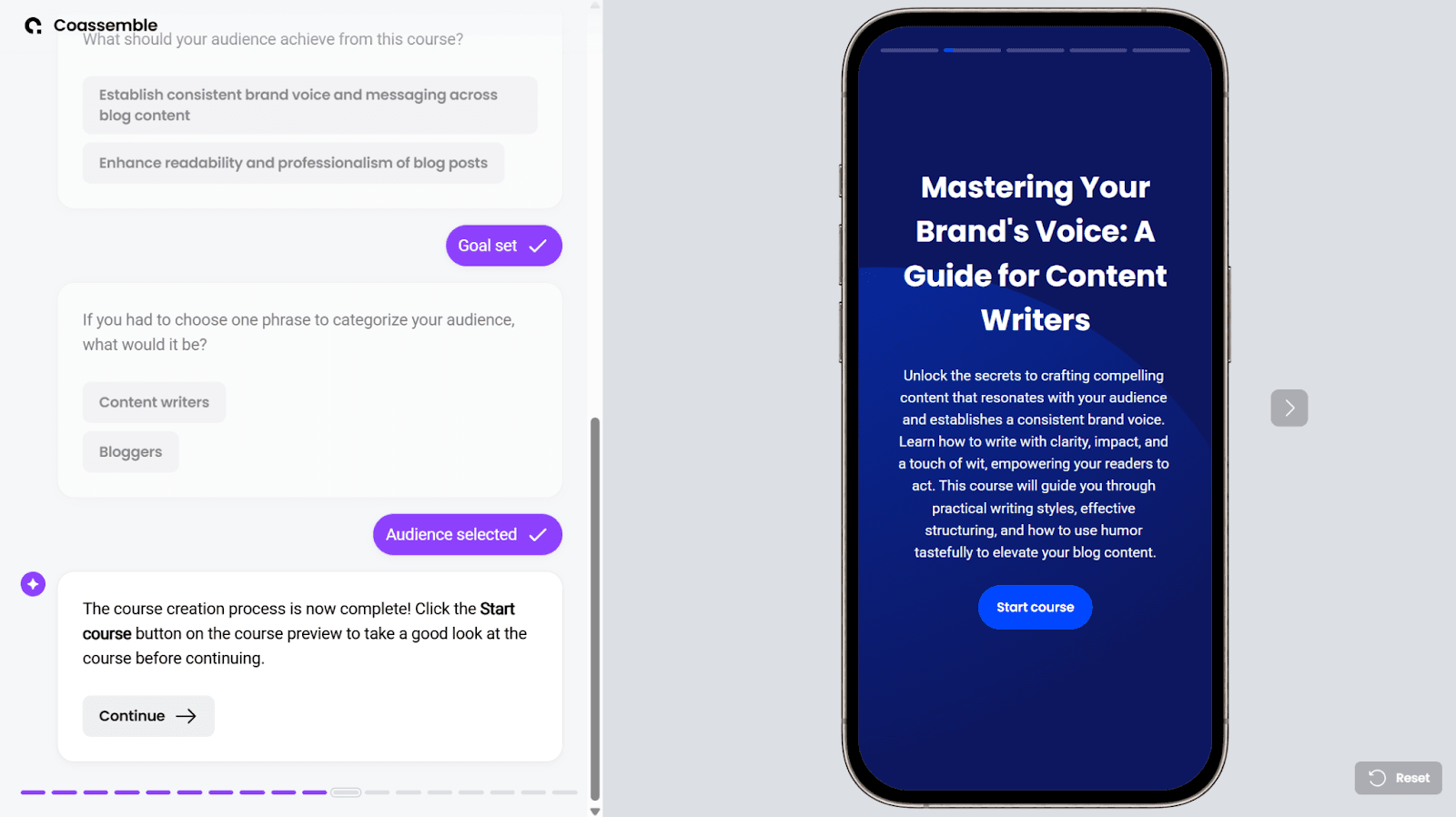
Once you answer the setup questions, the AI generates your sales training instantly.
Within seconds, you’ll see the full course appear on screen. Click through the lessons and review the structure.
Look for:
- Clear instructions
- Logical flow aligned to the sales process
- Gaps where reps might need more context
When everything looks right, continue. Next, you’ll be prompted to add optional elements like quizzes or a company URL.
Step 5: Choose how to share your training.
You can include them or skip ahead.
Then choose how to publish your training:
- Send an email invite
- Generate a share link for Slack, Teams, or your intranet
- Export a SCORM file for your LMS or HRIS
This flexibility lets sales training live where reps already work.
Step 6: Request a free sandbox to save and launch.
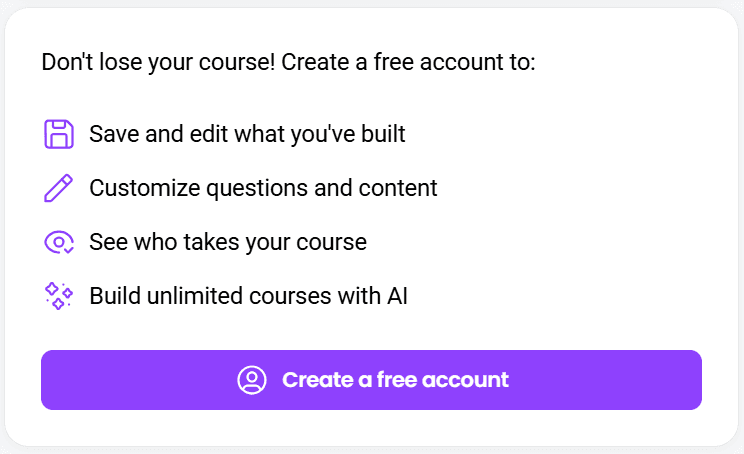
After previewing and choosing how to share, you can request a free sandbox to build and save your course on the full platform at no cost — a quick check confirms it's a fit.
You can view a sample course generated using Coassemble here: Unleash Your Organization's Hidden Knowledge: Create Free Online Courses.

Wrapping up
When artificial intelligence is used to structure and share that knowledge, training becomes easier to build, easier to update, and easier for sales reps to actually use. Coaching scales. Rep performance improves.
AI-powered sales training works best when it fits into how teams already sell and helps them get better with every interaction.
Your team already has the content you need. Coassemble helps turn it into training that moves.
FAQs about AI sales training
How can AI be used in sales?
AI can support sales teams by analyzing sales conversations, identifying patterns in customer interactions, and providing actionable feedback. It helps sales reps practice skills, receive instant feedback, and improve sales performance over time.
Can AI be used for training?
Yes. AI training tools turn existing content and real sales activity into structured learning. They support personalized training, continuous learning, and faster skill development without relying only on live sessions.
What is the best AI for sales training?
The best AI sales training tool depends on the goal. Coaching platforms focus on call analysis and feedback. Role-play tools help reps practice. Tools like Coassemble focus on turning sales knowledge into accessible, trackable training.
Do I need a separate AI sales training platform?
Not always. Many teams already use an LMS or internal tools. AI sales training works best when it plugs into existing systems and supports training where reps already work.
How is AI sales training different from traditional sales training?
Traditional coaching often relies on one-off sessions and static content. AI sales training supports real-time guidance, personalized feedback, and ongoing improvement based on real sales interactions.
Keep reading
What Is a Learning Experience Platform (LXP)?
Most articles on learning experience platforms are written for people who already run a mature training program. This one is for someone who's just been handed a knowledge problem to solve, fast. Here's what a learning experience platform is, how it fits next to an LMS, its key features, and the examples worth knowing — so you can tell whether an LXP is the right fit for your team.
Microlearning Trends 2026: What's Really Changing
The microlearning trends shaping 2026 all point to the same shift: short, focused lessons are replacing long courses because they finally fit inside busy schedules. But the real story isn't just length — it's who gets to build the training in the first place. Here are the five shifts driving the numbers this year, and what they mean for teams under pressure to move fast.
The LMS is no longer enough: The shift toward embedded learning
Learning platforms can deliver and track content well — but today's teams expect more. They want to create interactive learning inside the systems they already use. This guide explores how embedded e-learning turns an LMS from a delivery tool into a complete learning ecosystem.