How to create a learning and development strategy for 2026
Struggling with scattered training? Learn how to create a learning and development strategy that improves performance, retention, and execution.
Most teams want a learning and development strategy. They just don’t have the time, budget, or headspace to build one.
Training lives in old slide decks. Notes live in chat threads. Senior employees repeat the same explanations every week. Learning happens, but it’s messy. And it’s nowhere near supporting your business goals.
Most guides turn L&D into a corporate maze. Long theories. Complex models. Advice written for enterprises with full L&D departments.
But real teams need something different. A simple way to map what knowledge needs to move, who needs it, and how to deliver it without slowing the work.
This guide focuses on exactly that. You’ll get:
- Clear definitions without the jargon
- Practical steps you can execute with a small team
- A structure that turns learning into forward motion
- A strategy you can actually use as you plan for 2026
What is a learning and development strategy?

A learning and development strategy is a simple plan for how knowledge will move through your organization. It connects employee growth to your business goals, so learning supports the work rather than sitting on the sidelines.
Think of it as the link between what your company needs to achieve and the skills your team needs to get there. Without a clear learning strategy, most training becomes reactive. Someone asks for a course, someone else builds it, and no one checks if it actually supports the business strategy.
With a real learning and development strategy, you map the flow of knowledge with intention. It shows:
- What skills matter most right now
- Where skill gaps slow the work
- What learning and development programs can unblock progress
- How employee training supports bigger business priorities
It’s not a corporate exercise. It’s a way to keep your team aligned, skilled, and ready as the business evolves.
A practical example
Instead of creating a training program only when a manager requests one, your strategy outlines what knowledge needs to move this quarter:
- New product updates
- Improved business processes
- On-the-job training to support employee performance
With Coassemble, that plan becomes easy to act on. You can take the documents your team already uses, turn them into branded interactive training in minutes, and share them where people work. You plan ahead, not in reaction mode.
A strong L&D strategy transforms scattered learning into something purposeful, predictable, and tied directly to organizational success.
Why you need a learning and development strategy
A learning and development strategy brings direction. It shows how building skills supports your business goals, not just individual requests. Without it, learning stays reactive. With it, your team grows with purpose.
Retention and recruitment
People stay when they can grow. LinkedIn’s Workplace Learning Report shows that opportunities to learn and grow are the top driver of a great work culture, directly tied to retention and talent attraction.
A clear strategy shows your team that growth isn't random. It's planned. You’re investing in employee development with intention.
Business performance
Skill gaps slow down performance. IBM’s Global Skills Study found that more than 45% of organizations say these gaps prevent them from achieving their business goals.
A clear learning and development strategy helps you build the skills that improve productivity, quality, and everyday execution.
Strategic alignment
Learning only works when it supports where the business is heading. An L&D Trends Survey found that 66% of employees say they need new skills to stay effective in their roles, a clear sign that learning must stay aligned with shifting business needs.
A focused learning and development strategy keeps training aligned with your business goals, so learning drives real outcomes rather than disconnected activities.
How to create a learning and development strategy
A learning and development strategy doesn’t need a full L&D department, a big budget, or months of planning. You don’t need corporate playbooks or theoretical frameworks, either.
You need something simple: a clear way to connect your business goals to the skills your team needs to get there.
These steps work for any team size. They cut through the noise so you can build a strategy that guides learning and development programs, shapes learning initiatives, and actually supports your business.
Step 1: Identify your business goals
Start with the work, not the learning.
A strong learning and development strategy begins by anchoring your plan to real business goals. You’re identifying what the company needs to achieve and the skills that will move those goals forward. Everything else comes later.
Ask simple questions:
- What are our top business priorities for the next 6-12 months?
- What outcomes matter most to leadership and each team?
- Which skill gaps slow the work today?
- If our team gained a few new skills, where would we see the biggest shift in business performance?
This connects learning directly to work that matters, not random course requests.
If a core business objective is to improve customer satisfaction, your strategy might focus on employee development in product knowledge, communication, or on-the-job problem-solving. You’re linking learning directly to impact.
A short conversation with leadership or business unit heads is usually enough to clarify direction. Once you know the goals, you know what learning needs to happen, and why.
Step 2: Define key stakeholders
A learning and development strategy can’t sit inside one role. You need the people who understand the work, the goals, and the gaps.
Who to involve:
- Leadership: Sets the business strategy and approves resources. Their support keeps learning aligned with the company’s direction.
- Managers and team leads: Closest to daily work. They see skill gaps, missed steps in business processes, and where on-the-job training breaks down.
- Employees: They feel the friction firsthand. Their insights help you design relevant learning and development opportunities.
- HR or talent development owners: Even if it’s one person, they coordinate development programs and track progress.
What to do:
- Hold short conversations.
- Ask what slows teams down.
- Ask what “good” looks like.
- Ask where learning can make work easier.
This gives your L&D strategy practical grounding instead of assumptions.
For smaller teams, this step can happen in one afternoon. The goal is clarity, not bureaucracy.
Step 3: Conduct a skills gap analysis
A skills gap analysis shows where your team is today and what they need to reach your business goals. You’re looking for the places where work slows, knowledge is inconsistent, or tasks depend on one person.
Simple ways to find the gaps:
- Manager insights: They see recurring friction and missing employees’ skills.
- Employee feedback: They know where tasks feel unclear or where they want professional development.
- Performance data: Escalations, errors, or delays highlight where learning interventions matter.
- Knowledge audit: Outdated training materials, scattered notes, or tribal knowledge.
Thomson Reuters discovered its support team had strong product knowledge but weak general technical skills. That gap showed up in longer troubleshooting times and more escalations. They partnered with CompTIA to build a targeted development path, improving confidence and customer outcomes.
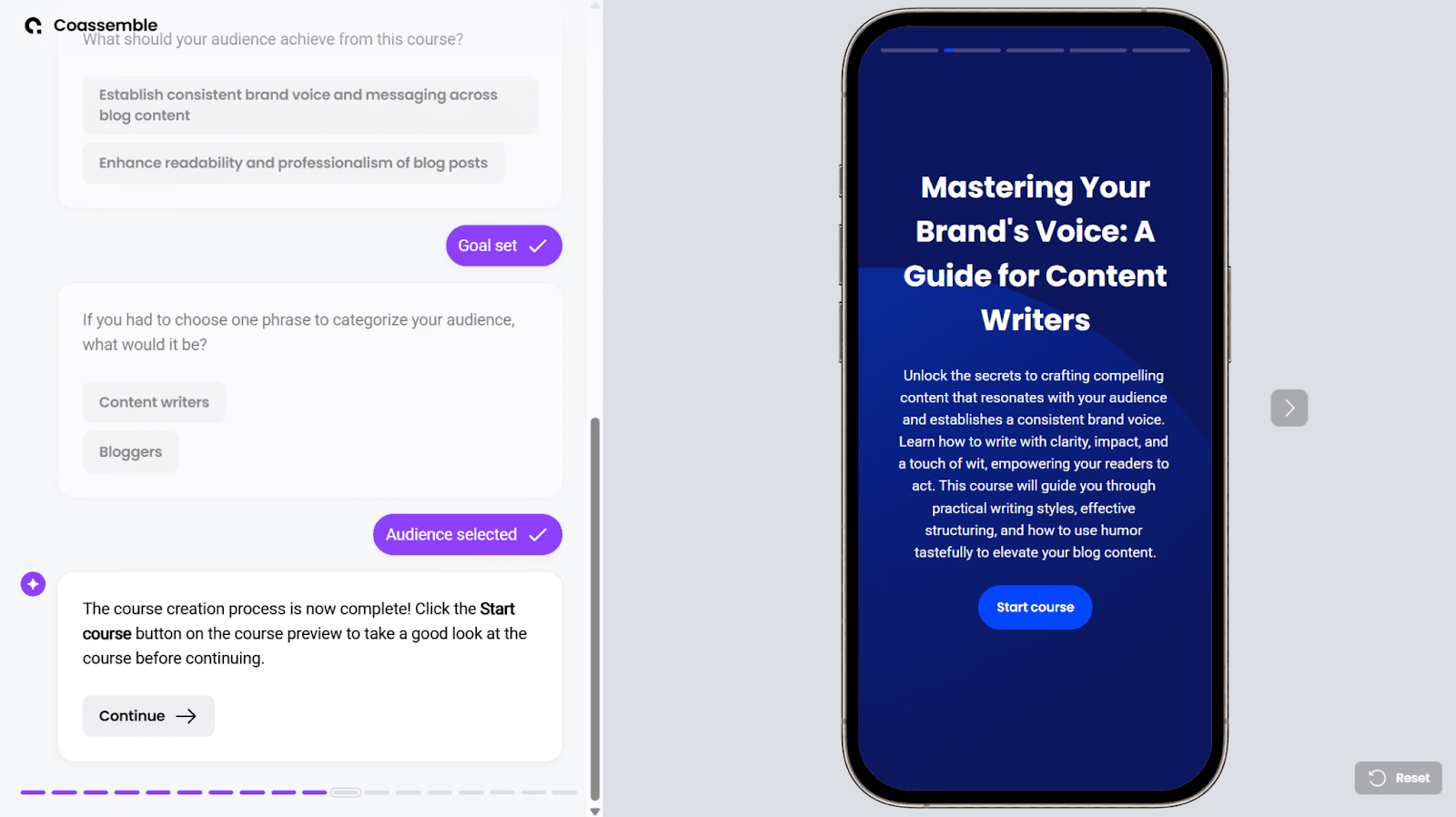
Once you see the gaps, you can act on them quickly. This is where Coassemble fits naturally.
You can take the knowledge your team already has (docs, decks, internal notes) and turn it into clear, accessible, interactive training. Instead of letting gaps linger, you close them with fast, branded learning experiences your team can use immediately.
Step 4: Set L&D goals with KPIs
Once you know the gaps, turn them into clear targets. Your strategy needs real targets, not vague intentions.
Use SMART goals: Specific, Measurable, Achievable, Relevant, and Time-bound. They anchor your learning initiatives to your business strategy so you can measure progress, not guess.
Good vs. bad L&D goals
- Bad: “Improve employee skills.”
- Good: “Train 100% of the sales team on new product positioning by the end of Q1.”
- Bad: “Offer more training.”
- Good: “Cut onboarding time from 3 months to 6 weeks while maintaining performance metrics.”
- Bad: “Use our new LMS.”
- Good: “Boost self-directed learning by 50% by making resources available directly in Slack.”
The KPIs that matter
- Engagement metrics: Completions, drop-offs, time spent learning
- Knowledge metrics: Assessment scores, demonstrated skill improvements
- Business metrics: Faster time to productivity, improved employee performance, lower churn, higher customer satisfaction
Tie each metric to a real outcome. The goal isn’t for someone to complete a course. It’s that they work with more confidence, make fewer mistakes, or accelerate key business processes.
Clear goals turn your L&D strategy into a living system. You know what success looks like and how to track it.
Step 5: Develop learning plans and experiences
With your goals set, design how learning will actually happen. You’re choosing the learning and development initiatives that help people work smarter, not building a full curriculum.
Pick formats that match how your team already works.
Ways people learn:
- Short digital lessons
- Scenario-based practice
- Classroom training when hands-on matters
- Peer coaching and informal learning
- Role-based paths for clear employee learning journeys
Content to create:
- How-to guides
- Process walkthroughs
- Product refreshers
- Job aids
- Quick assessments
Share training in the places your team already lives (Slack, email, or connected systems), so learning fits naturally into the day.
Keep it focused. Build only the learning experiences that support your business goals, strengthen employee capabilities, and remove the friction you identified earlier.
Step 6: Choose your tools (Coassemble)
Now that you know what your team needs to learn, you need tools that help you create, deliver, and track training without slowing down the work.
What to look for in L&D tools:
- Ease of use: Anyone on your team should be able to create content—not just technical people.
- Speed: Your tool should turn existing knowledge into training fast.
- Flexibility: Training needs to reach people where they already work.
- Cost: Clear, predictable pricing with no surprises.
- Analytics: You should know what’s landing and where support is needed.
This is where Coassemble fits naturally into your strategy. It’s built for teams that need practical tools, not enterprise complexity.
Why Coassemble works for real-world L&D:
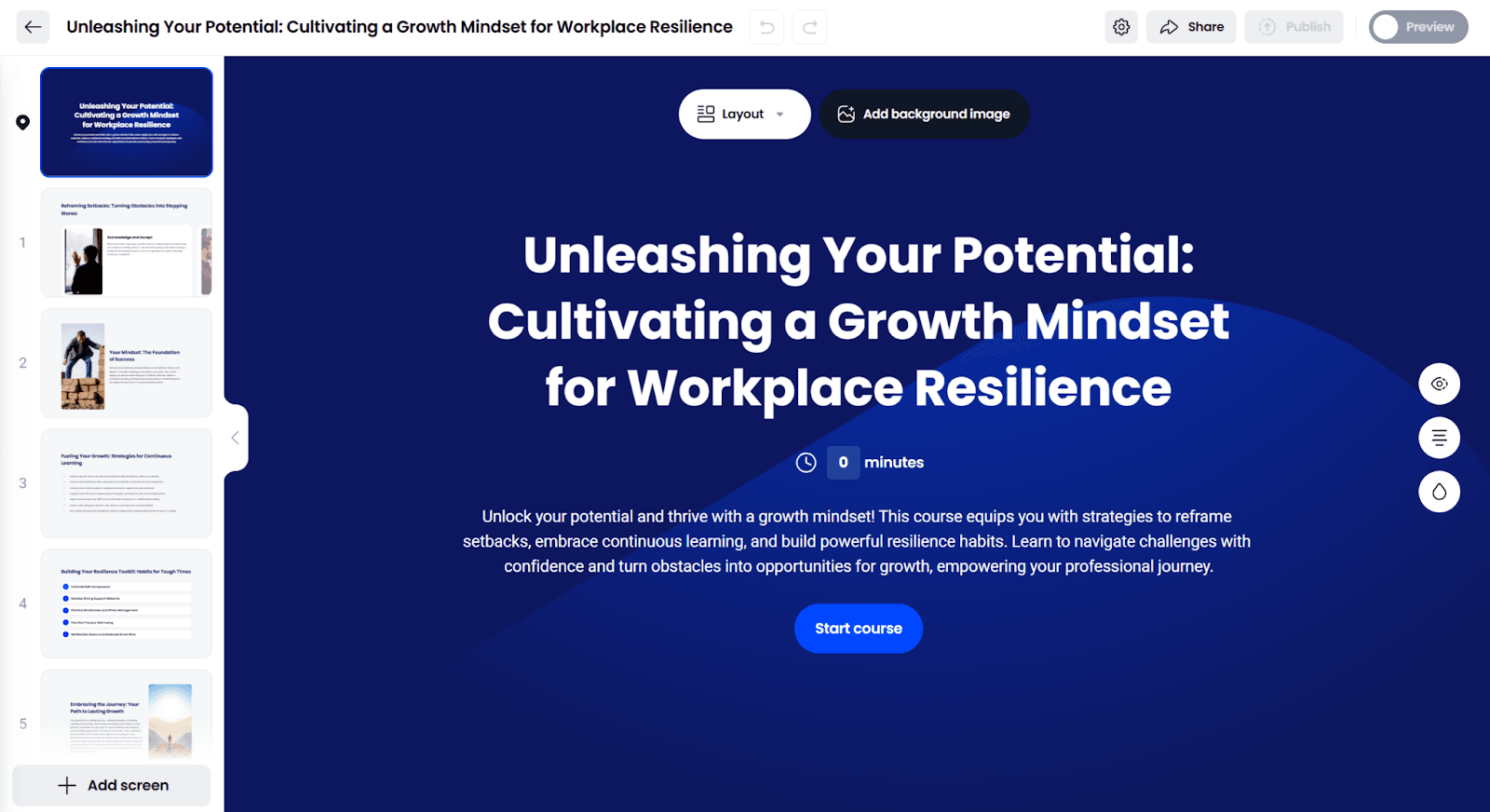
- Try it before you buy: Request a free sandbox to build and test on the full platform at no cost, no pressure.
- AI-powered course creation: Upload PowerPoints, PDFs, SOPs, or notes. AI turns them into branded, interactive training in minutes.
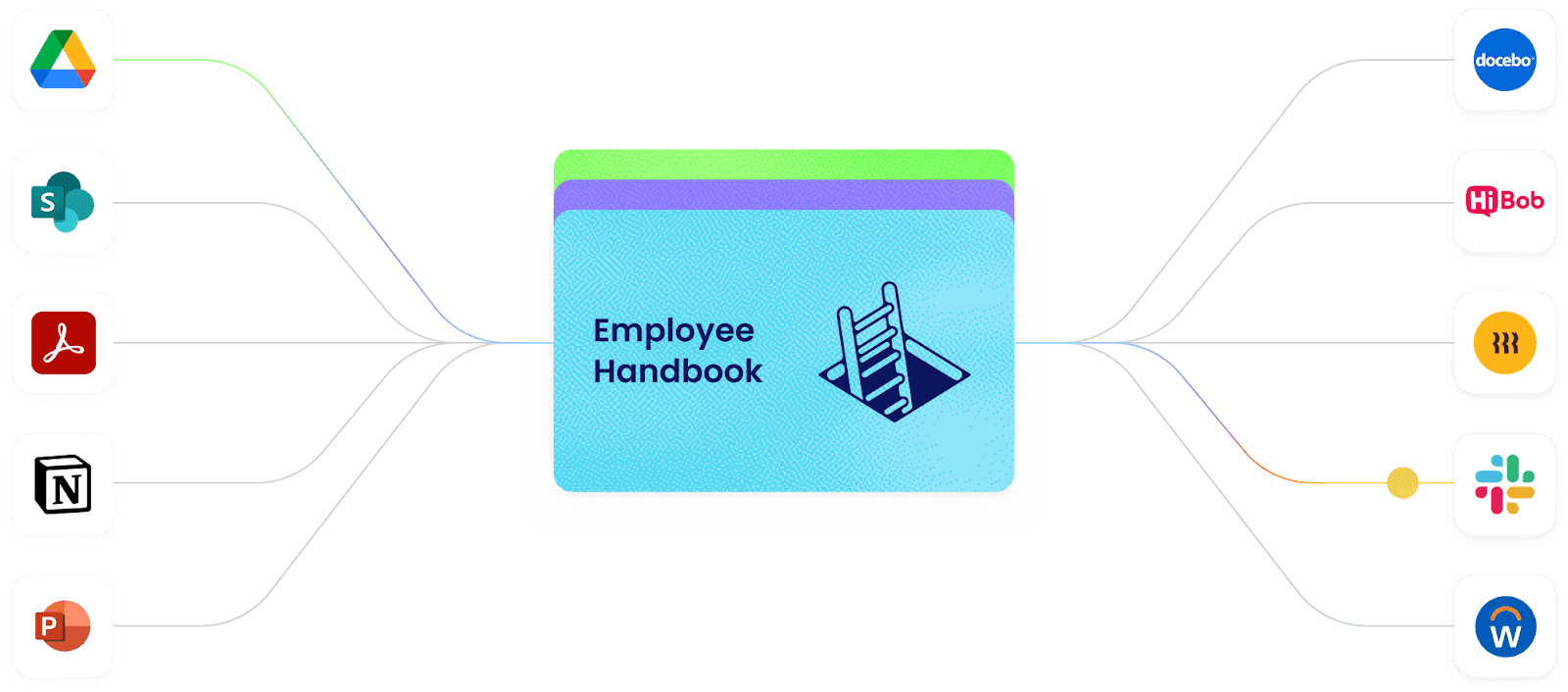
- Share anywhere: Drop a link in Slack, embed inside your systems, or export to your existing learning management system.
- No design skills needed: Focus on clarity; Coassemble handles the layout.
- Meaningful analytics: Track engagement and see how learning supports your business goals.
**Learn more: **Create Free Online Courses with AI in Minutes
Compared to traditional tools:
Traditional LMS tools take weeks to build courses and charge per seat. Coassemble helps teams design training quickly, share it anywhere, and keep knowledge moving without the learning curve.
**See the difference: **AI-Powered Training vs. Traditional LMS
Step 7: Write your learning and development strategy to share
Most teams build a learning and development strategy, save it somewhere, and hope people read it.
They rarely do.
A strategy only works if people can actually find it, understand it, and act on it. So instead of treating it like a formal document, treat it like a working guide for how learning supports your business goals.
Three simple ways to share your strategy:
- Traditional document: Useful for record-keeping or approvals, but easy to overlook.
- Presentation slides: Great for alignment meetings, harder to maintain as things change.
- Interactive walkthrough: A short, structured experience people can move through quickly. Clear. Visual. Easy to revisit when priorities shift.
This approach keeps your development strategy visible instead of buried.
And if you want to turn your strategy into something people will actually use, you can upload your doc to Coassemble and let AI format it into a clean, guided walk-through, ready to share anywhere your team works.
What to include in your learning strategy document
A strong learning and development strategy needs clarity. Anyone reading it should understand how learning connects to your business goals and where the team is headed next.
Use this simple structure:
- Executive summary: Why learning matters this year and what you’re trying to achieve.
- Business alignment: The business priorities your strategy supports.
- Current state analysis: The skill gaps slowing work down and their impact.
- L&D goals and KPIs: The outcomes you’re targeting and how you’ll measure them.
- Learning initiatives: The training programs, workshops, or digital learning you’ll deliver.
- Timeline and milestones: What happens when, and what progress looks like.
- Roles and responsibilities: Who owns each part of the strategy, from leadership to managers to HR.
- Budget and resources: What’s required to make the plan real.
- Measurement plan: How you’ll track progress and adjust over time.
This gives everyone a clear, shared view of what the strategy aims to do and how learning will support the work.
Wrapping up
A learning and development strategy needs to be practical and uncomplicated. When you connect learning to your business goals, identify the real skill gaps, and build focused learning initiatives, you turn training into progress, not paperwork.
The steps you’ve outlined give your team direction. They show what matters now, where people need support, and how learning can move the business forward. And once your strategy is clear, learning stops being reactive. It becomes part of how your organization grows, adapts, and stays confident through change.
Your team already has the knowledge. Coassemble can help put your strategy in motion.
FAQs about creating a learning and development strategy
What is a learning and development strategy?
It’s a simple plan that connects employee growth to your business goals. It outlines what skills your team needs, how you’ll build them, and how learning supports your overall business strategy.
What should a learning and development strategy look like?
It should be clear and practical: your priorities, the skill gaps you’ve identified, the learning initiatives you’ll run, and the KPIs you’ll track. One document that shows how learning drives organizational performance.
What tools can I use to create a learning and development strategy?
Most teams use a mix of docs, slides, and planning templates. You can keep it simple. Focus on clarity, not format. Use whatever helps you map your development programs and link them back to your business strategy.
How can I execute our learning and development strategy efficiently?
Start with the knowledge you already have. Build focused training programs, share them where your team works, and track real outcomes, not just completions. Keep your strategy alive by reviewing metrics and adjusting as your business priorities shift.
Keep reading
What Is a Learning Experience Platform (LXP)?
Most articles on learning experience platforms are written for people who already run a mature training program. This one is for someone who's just been handed a knowledge problem to solve, fast. Here's what a learning experience platform is, how it fits next to an LMS, its key features, and the examples worth knowing — so you can tell whether an LXP is the right fit for your team.
Microlearning Trends 2026: What's Really Changing
The microlearning trends shaping 2026 all point to the same shift: short, focused lessons are replacing long courses because they finally fit inside busy schedules. But the real story isn't just length — it's who gets to build the training in the first place. Here are the five shifts driving the numbers this year, and what they mean for teams under pressure to move fast.
The LMS is no longer enough: The shift toward embedded learning
Learning platforms can deliver and track content well — but today's teams expect more. They want to create interactive learning inside the systems they already use. This guide explores how embedded e-learning turns an LMS from a delivery tool into a complete learning ecosystem.